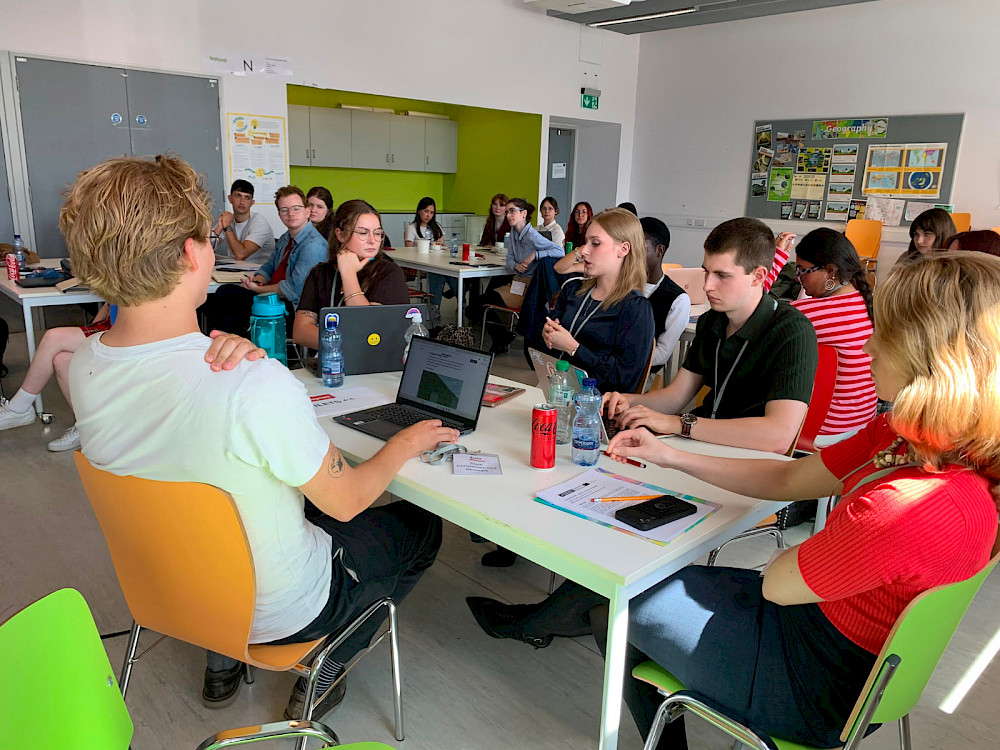


Twenty-four young people from across Europe gathered in Dublin today for a Media Literacy Incubator workshop organised by DCU FuJo, as part of the EU-funded ChangingTIDE project. The one-day event equipped participants with practical skills to recognise and counter disinformation through media literacy.
Participants came from a diverse range of backgrounds, including Leaving Cert students, PhD candidates, community workers, and healthcare professionals. Their countries of origin included Ireland, Ukraine, Poland, Denmark, Italy, Belgium, Portugal, and Romania.
The workshop featured presentations from Dr Eileen Culloty, Dr Ricardo Castellini da Silva (DCU FuJo), Martina Chapman (Media Literacy Ireland), and Emily Lynch (Coimisiún na Meán). Sessions covered transnational disinformation, grassroots media literacy responses, and regulatory frameworks at Irish and EU levels. Dr Castellini da Silva also led a hands-on media literacy workshop in the afternoon.
The Dublin workshop marks a key milestone in the ChangingTIDE project, which aims to build democratic resilience through media literacy education, youth empowerment and participatory dialogue.
Participants now have the opportunity to apply for the project's Changemakers Programme, a structured mentorship initiative that will bring together 20 motivated young people in Brussels to design awareness-raising campaigns addressing disinformation. The programme is led by TEPSA - Trans European Policy Studies Association.
The ChangingTIDE project is coordinated by TEPSA and involves a pan-European consortium including DCU/EDMO Ireland, the International Centre for Defence and Security, and several other European partners. The initiative is supported by the EU's CERV programme.
Related Projects
The project ChangingTIDE (Together to Inform, Debunk, and Empower) is funded under the EU Citizens, Equality, Rights and Values (CERV) programme from February 2026. It is coordinated by the Trans European Policy Studies Association (TEPSA) with a consortium comprising the Austrian Society for European Politics (ÖGFE), the Austrian Institute for International Affairs (OIIP), the Institute for Development and International Relations (IRMO), the Portuguese Institute of International Relations (IPR...