Overview
Funded by the European Media and Information Fund and coordinated by University Institute of Lisbon (Iscte), this project responded to an urgent need to upskill Europe’s public librarians with media and information literacy (MIL).
MIL CC consisted of three highly experienced partners: the University Institute of Lisbon (coordinator), an academic institute with expertise in media literacy and journalism; Learn to Check, an NGO that promotes media and information literacy and critical thinking in Spain; and DCU FuJo, an academic institute with expertise in media literacy and coutering disinformation.
The project was supported by the Portuguese Directorate-General for Books, Archives and Libraries (DGLAB), Portuguese Association of Librarians (BAD); Spanish Society of Scientific Documentation and Information (SEDIC); Ireland's Local Government Management Agency (LGMA); Public Libraries 2030 (PL2030), and Media Literacy Ireland (MLI).
Background
Public libraries play a crucial and trusted community role. They are venues for lifelong learning and social integration and they reach members of the community who are often neglected by traditional MIL interventions. To realise their potential, public libraries must overcome several challenges: librarians generally lack MIL training; existing MIL resources are not tailored for the needs of libraries and their patrons; and library structures and community contexts vary greatly across Europe, but MIL resources are typically created with little regard to issues of translation and adaptation.
MIL CC addressed these challenges through three concrete outcomes: (i) an updated hybrid course (in English, Spanish and Portuguese) that equips librarians with relevant knowledge and skills to provide MIL to the local community; (ii) a comprehensive set of standards to design, implement and assess MIL community projects led by public libraries; and (iii) a network of interconnected European libraries commited to developing media literacy.
The core aim of MIL-CC was to develop a practical, relevant training programme that increases public librarians' knowledge and understanding of media literacy; builds librarians' confidence to curate events and engage with the public on media literacy topics; and adapts to the realities of library work including limited time, diverse audiences, and low-tech environments.
The learning process for librarians was based on learning about media literacy, planning an activity, implementing the activity, and reflecting on lessons leearned.
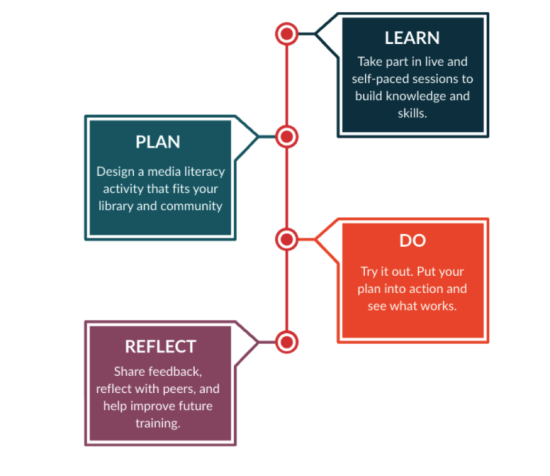
The Training Programme
This comprehensive training programme was designed to build librarians' knowledge, skills, and confidence so they can commission, curate, or deliver media literacy events in their libraries. For more detailed information about the training programme and how it operated, please refer to the project booklet.
A detailed breakdown of the training and the training materials in English is available here.
A Spanish version of the programme, hosted by Learn To Check, is available here.
These resources are free to use. When using these materials, please credit the project as follows: This training programme was developed as part of the MIL-CC (Media and Information Literacy Community Connections) project, funded by the European Media and Information Fund and coordinated by University Institute of Lisbon (Iscte) with Learn to Check and Dublin City University."
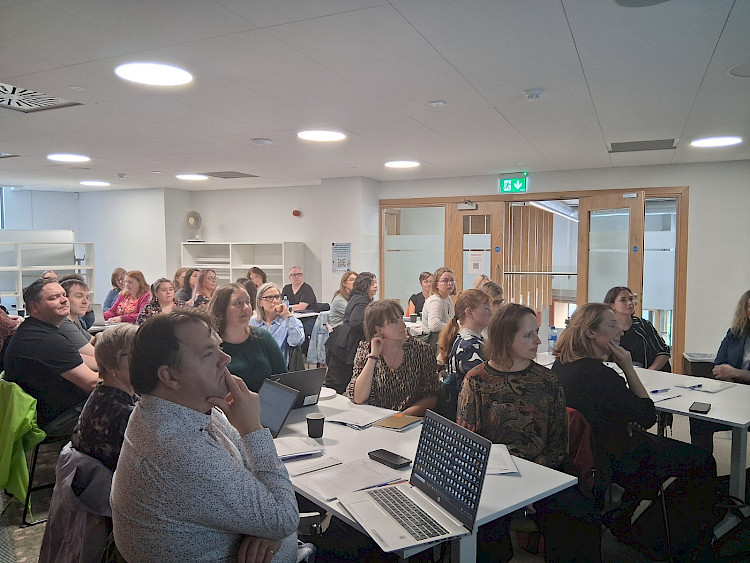
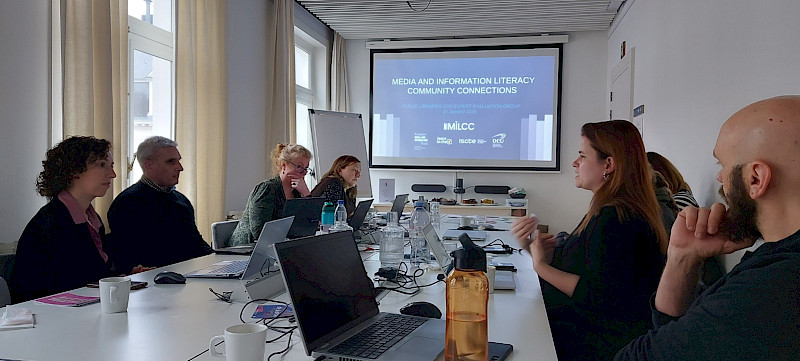
MIL CC Workshop in Ireland
Project Results
The project delivered a report on Standards and Best Practices for Delivering Media Literacy in Public Libraries: Insights from the MIL-CC Pilot. This report presents practical insights for upskilling public librarians with media literacy competence, updated standards for the implementation of media literacy activities by public libraries, and best practices derived from diverse contextual experiences across the three participating countries.
The report can be accessed here.
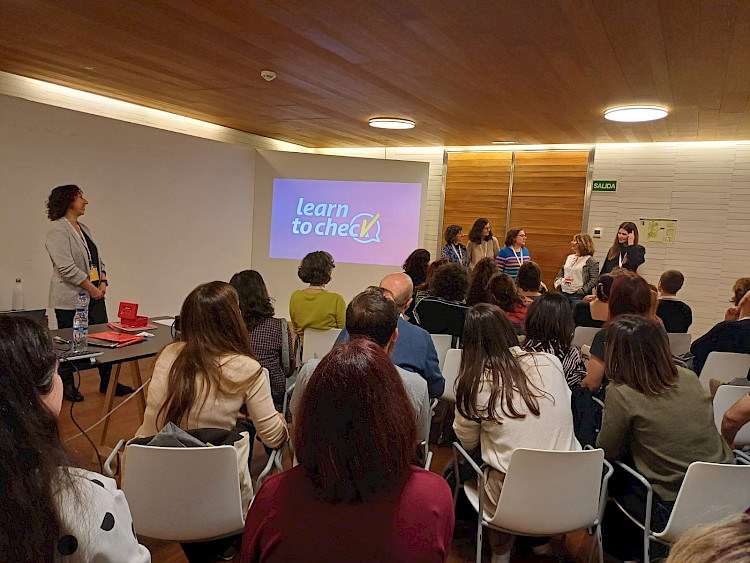
MIL CC Workshop in Spain
Key Information

- Project dates:01/10/2024 - 28/02/2026
- Website:
- Contact:Vitor Tomé
Funder
European Media and Information Fund (EMIF)